16 Choose-Your-Own-Adventure Service Projects

Ministry, Resources, Uncategorized, youth ministry

Just one week before our youth mission trip to St. Louis—and right before a major holiday—our only scheduled service project completely fell through. With a group of teens ready to serve and no time to secure new partners, I had a choice: panic… or pivot.

So instead of “crashing out” (as the kids say), I reimagined the entire structure of our service day.

And while most of the projects weren’t uniquely tied to St. Louis, that almost made them more magical. The youth kept asking, “Can we do this at home too?”—which, of course, was the real win.

To add: some of these are… unique. Because we had originally planned to do a VBS, I had some crafts such as Wreaths and Flower Pots that I was wondering if I could repurpose a little for service projects. But I think that was part of our magic! Many of these were also inspired from my community at Women in Youth Ministry. Need some creative last-minute ideas? These women will help!

I put the service projects on cards and laid them out on a table. Each project had a clear summary, budget, supply list, scripture verse, and a reflection question—so they were ready to completely own it.

I read the projects to the group all at once, let them talk about it, and when they were ready they came up and chose a card to do the next day. They had a half hour to plan during our evening gathering time, then the next morning had three hours to execute. I put the cash in a pencil pouch, handed it over to a youth in charge, and told them to tell our group where to go. They had full autonomy and did a phenomenal job!
Park Cleanup

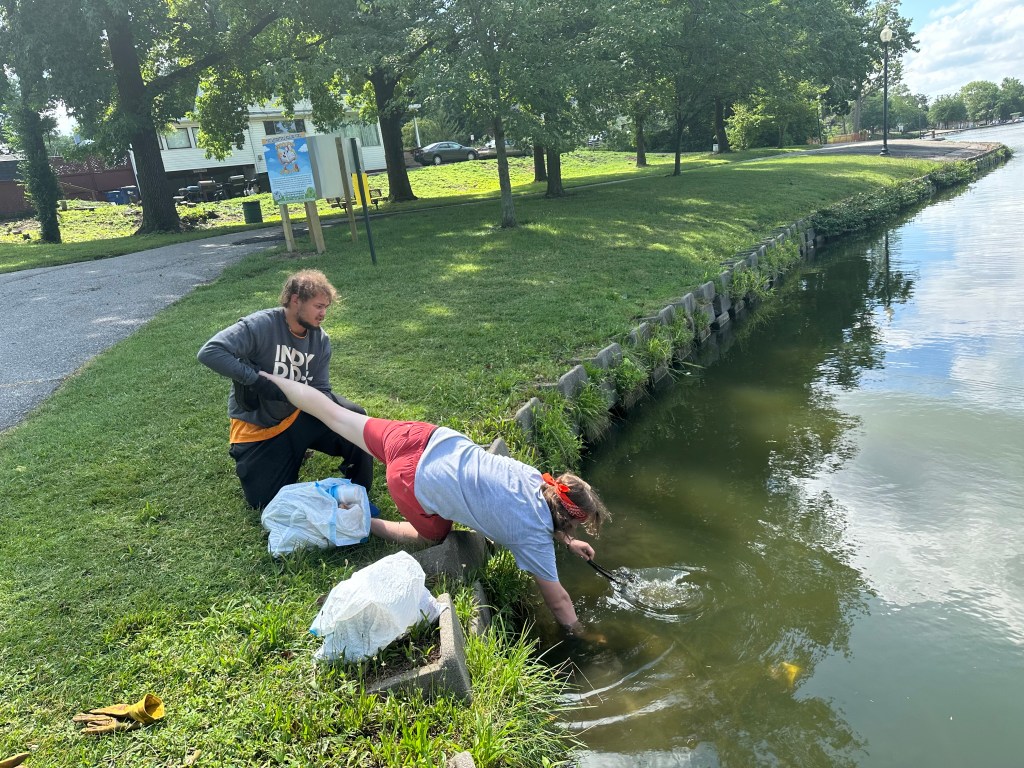
Summary: Help care for God’s creation by cleaning up litter and beautifying a local park.

Budget Guide: Low ($0–$20 for gloves, trash bags, optional snacks)

Supplies Needed: Trash bags, gloves, hand sanitizer, optional sidewalk chalk

Spiritual Goal / Verse: Genesis 2:15 – ‘The Lord God took the man and put him in the Garden of Eden to work it and take care of it.’

Reflection Question: What does it mean to take responsibility for a space we don’t own?

Little Libraries / Little Food Pantries

Summary: Stock and decorate neighborhood mini-libraries and food pantries with books, canned goods, and kind notes.

Budget Guide: $25–$100 for books, food staples, and decorating supplies

Supplies Needed: Books, canned goods, markers, notes, stickers

Spiritual Goal / Verse: Matthew 25:35 – ‘For I was hungry and you gave me something to eat.’

Reflection Question: How does sharing anonymously still help us feel connected?

Cards & Treats for Local Police, Fire Stations, Emergency Room Workers, Etc.

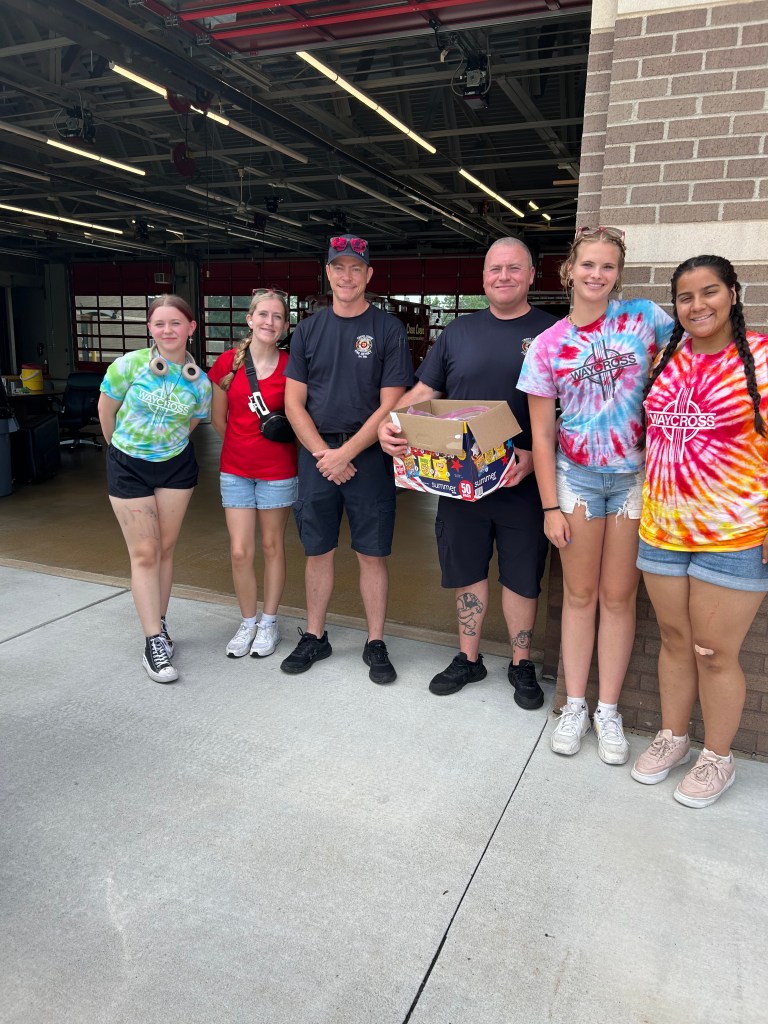
Summary: Show gratitude to local first responders with handwritten cards and treats.

Budget Guide: $25–$75 for treats and card supplies

Supplies Needed: Thank-you cards, markers, store-bought snacks or baked goods

Spiritual Goal / Verse: 1 Thessalonians 5:11 – ‘Encourage one another and build each other up.’

Reflection Question: Why is it important to acknowledge people who serve in hard jobs?
Laundry Love

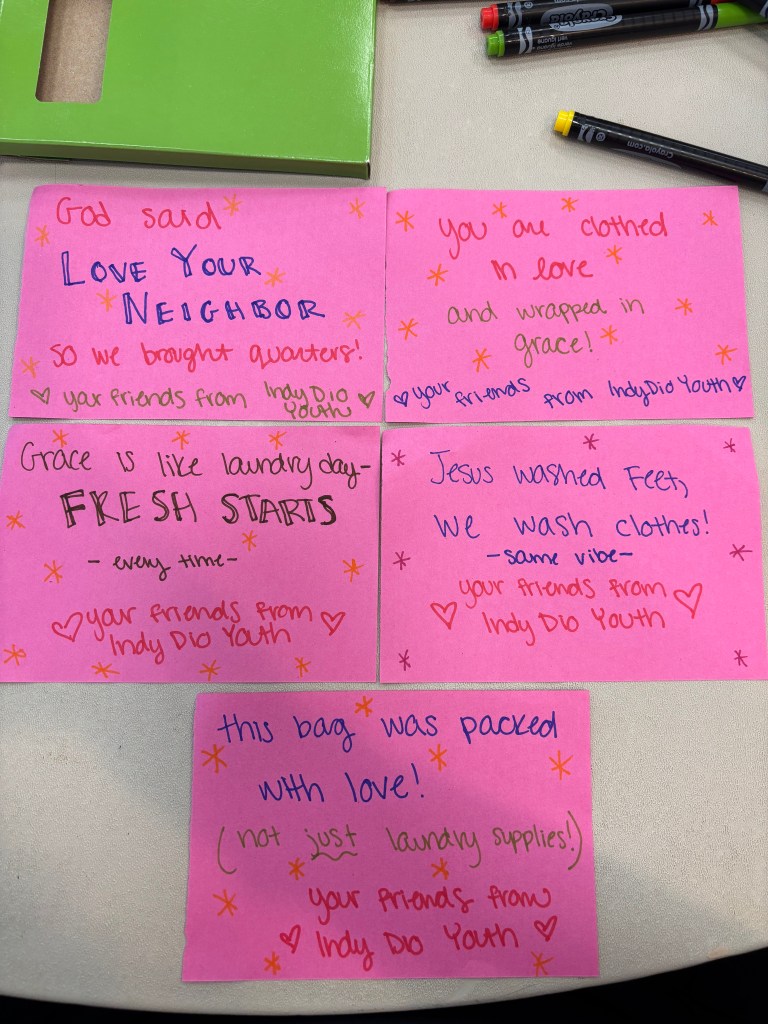
Summary: Leave quarters and detergent at laundromats for neighbors doing laundry.

Budget Guide: $25–$100 in quarters and supplies

Supplies Needed: Quarters, detergent pods, ziplock bags, tape, printed notes

Spiritual Goal / Verse: Galatians 6:2 – ‘Carry each other’s burdens, and in this way you will fulfill the law of Christ.’

Reflection Question: How does meeting a basic need reflect God’s love?

Hygiene Kits for Shelters

Summary: Assemble and donate hygiene kits for people experiencing homelessness.

Budget Guide: $50–$100 for bulk hygiene supplies

Supplies Needed: Toothbrushes, toothpaste, wipes, soap, socks, ziplock bags. You could also make menstrual supplies kits (tampons, pads, wipes, even reusable cups/discs).

Spiritual Goal / Verse: Proverbs 19:17 – ‘Whoever is kind to the poor lends to the Lord.’

Reflection Question: Why does dignity matter when helping others?

Water + Snack Giveaway

Summary: Hand out water bottles and snacks at parks or bus stops with affirming notes.

Budget Guide: $25–$100 for snacks and bottled water

Supplies Needed: Water bottles, snacks, handwritten notes or stickers

Spiritual Goal / Verse:: Mark 9:41 – ‘Anyone who gives you a cup of water in my name… will certainly not lose their reward.’

Reflection Question: What does it feel like to give without expecting anything in return?
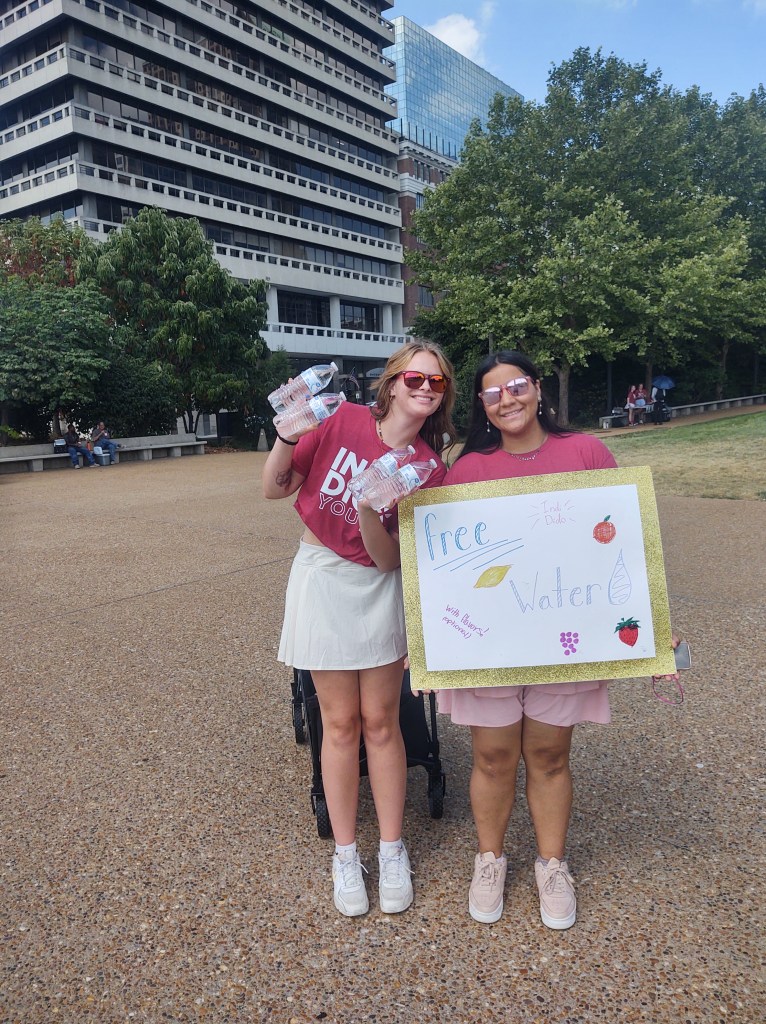
Lemonade & Listening

Summary: Offer free lemonade and kind conversation in a local park or busy street corner.

Budget Guide: $20–$40 for lemonade supplies and signage

Supplies Needed: Cooler, cups, lemonade mix, poster board, markers, chairs

Spiritual Goal / Verse: Hebrews 13:2 – ‘Do not forget to show hospitality to strangers.’

Reflection Question: What can we learn when we stop to really listen to others?

“Ray of Sunshine” Baskets for the Homebound

Summary:  Create cheerful baskets filled with all yellow items and handmade cards to brighten the day of members of the church who are currently homebound. Coordinate with (insert church’s name) contact list.

Budget Guide: $100 total

Supplies Needed: Yellow baskets/bags, yellow items (lemon drops, socks, journals, teas, candles, pens, etc), list from the church, handmade cards, tags for bags

Spiritual Goal / Verse: Philippians 1:3–5 – “I thank my God every time I remember you. In all my prayers for all of you, I always pray with joy.”

Reflection Question: How can we reflect God’s light to those who may feel forgotten or isolated?

Unhoused Showers Ministry

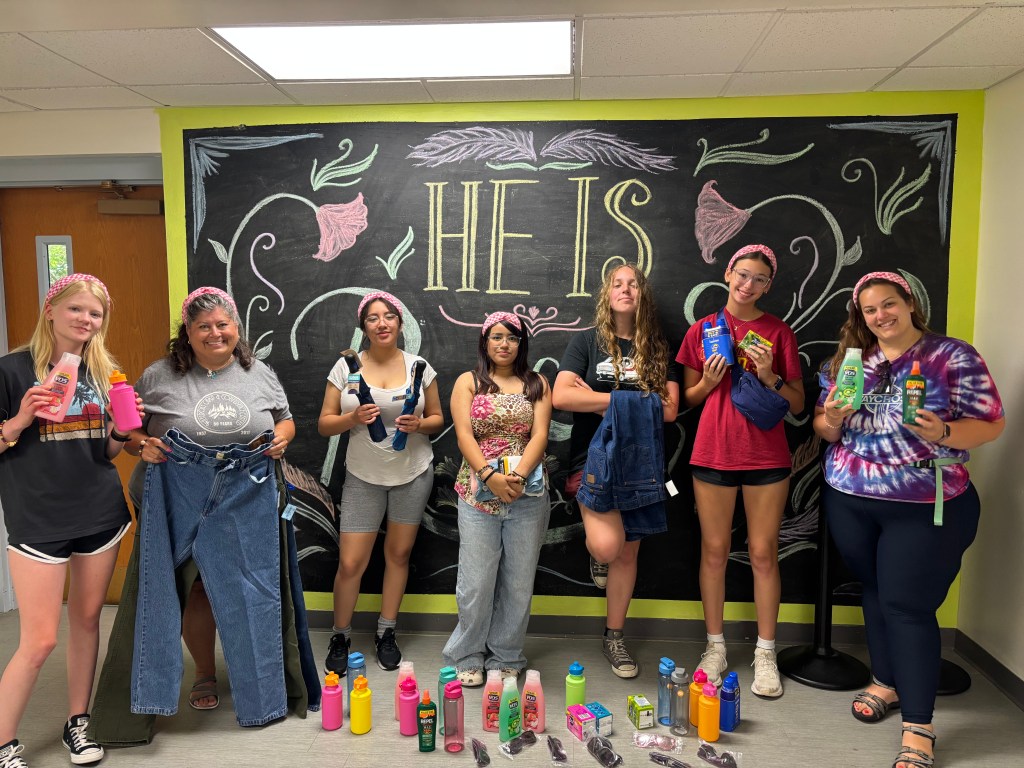
Summary: Collect items for a local church or shelter’s Showers Ministry, which helps people who are unhoused.

Budget Guide: $100

Supplies Needed: Shower supplies – or check with the ministry’s list of needed supplies

Spiritual Goal / Verse:Isaiah 58:7 (NRSV) – “Is it not to share your bread with the hungry, and bring the homeless poor into your house; when you see the naked, to cover them, and not to hide yourself from your own kin?”

Reflection Question: What does it mean to see someone experiencing homelessness not as a stranger, but as kin?

Our group chose to donate these items to St. Charles UMC’s Shower Ministry, but any shelter or street outreach program would be blessed by this.
Diaper Blessings

Summary: Shop for diapers in a variety of sizes and donate them to a local diaper bank or shelter that serves families in need. Create handwritten cards or notes of blessing to include with the donation—something simple to encourage and uplift parents or caregivers.

Budget Guide: $100 total

Supplies Needed: Diapers, card-making supplies

Spiritual Goal / Verse: Psalm 127:3 – “Children are a heritage from the Lord, offspring a reward from him.”

Reflection Question: What does it mean to support someone you’ll never meet? How does this kind of giving reflect God’s trust in us to care for each other?
Bandanas for Pet Shelters

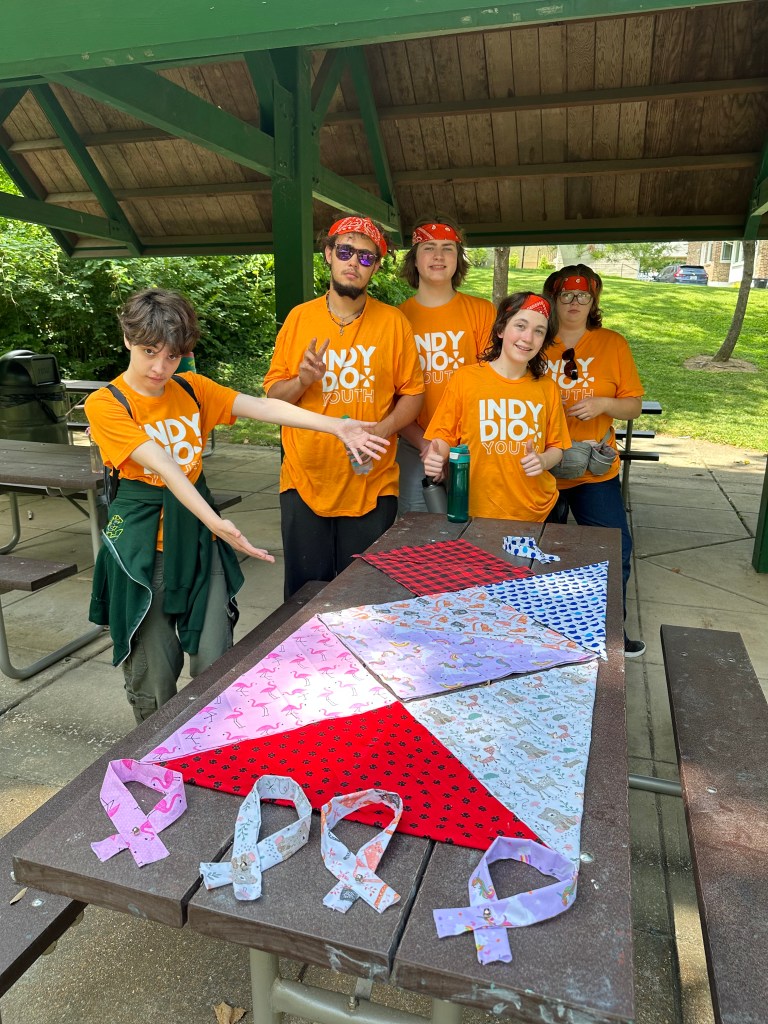
Summary: Create cheerful pet bandanas for animals in shelters to wear during adoption events. These small accessories can make pets more approachable and increase their chances of finding a forever home.

Budget Guide: $25–$75 for fabric, pinking shears, and optional fabric markers

Supplies Needed: Fabric from a craft stores, sharp scissors or pinking shears

Spiritual Goal / Verse: Proverbs 12:10 – “The righteous care for the needs of their animals.”

Reflection Question: How can simple acts of kindness toward animals reflect God’s love for all creation?

Dollar Tree Dinners

Summary: Create shelf-stable, low-cost meal kits. Each kit should fit in a gallon-sized Ziploc bag and include a simple recipe card. Drop off at a local food pantry to help people prepare a full meal with ease. Dollar Tree Dinners on TikTok has a examples.

Budget Guide: $100 total

Supplies Needed: Gallon-sized Ziploc bags, shelf-stable meal ingredients, index cards, markers/pens

Spiritual Goal / Verse: James 2:15–16 – “If a brother or sister is poorly clothed and lacking in daily food, and one of you says to them, ‘Go in peace, be warmed and filled,’ without giving them the things needed for the body, what good is that?”

Reflection Question: How can meeting someone’s basic needs also help them feel seen, valued, and loved?

Food Pantry Restock

Summary: Many food pantries are facing shortages and budget cuts. This project invites you to research a local pantry, discover their most-needed items, and use your group’s budget to shop thoughtfully. Your donations will help restock their shelves and ensure families have access to what they need.

Budget Guide: $100 total

Supplies Needed:

Spiritual Goal / Verse: Matthew 25:35 – “For I was hungry and you gave me something to eat.”

Reflection Question: How does feeding someone—whether you know them or not—connect us more deeply to God’s love?

Because St. Louis experienced a tornado, we did a collective Tornado Relief drive. We dropped bags off on Monday and got them on Thursday – taking two days of our week!

Joy Wreaths for Nursing Homes

Summary: Research local food pantries and look up what they are in most need of right now. Many food pantries have lost funding.

Budget Guide: $100 total

Supplies Needed: Wreaths (we have cardboard wreaths), items from a craft store/dollar tree. Use cord/string for hanging.

Spiritual Goal / Verse: Romans 15:13 – “May the God of hope fill you with all joy and peace in believing, so that you may abound in hope by the power of the Holy Spirit.”

Reflection Question: How can a simple, handmade gift become a reminder of God’s joy and presence in someone’s life?

Flower Pots for First Responders, Nursing Homes, etc.

Summary: Decorate flower pots and plant seeds as a symbol of gratitude, growth, and care. Pair each pot with a handwritten thank-you card and deliver to people who serve or may feel forgotten—such as first responders, healthcare workers, nursing home residents, or long-time church members.

Budget Guide: N/A – items in stock!

Supplies Needed: Thank-you cards, markers, flower pots, peats, seeds, paint markers

Spiritual Goal / Verse:  1 Corinthians 3:6–7 – “I planted, Apollos watered, but God gave the growth. So neither the one who plants nor the one who waters is anything, but only God who gives the growth.”

Reflection Question: How can small, thoughtful actions plant seeds of gratitude and hope in someone else’s life?

Create Your Own!

Summary: Come up with your own service project! Stay within budget and submit your plan to a leader.

Budget Guide: Up to $100

Supplies Needed: Whatever your group dreams up!

Spiritual Goal / Verse: Ephesians 2:10 – ‘For we are God’s handiwork, created in Christ Jesus to do good works.’

Reflection Question: What needs are you noticing that others might miss?


Click here to download the simple cards I made in Microsoft Word!

Videos for Student Ministry

fun video, lessons, media, music, youth ministry, youthmin.org

HEYOOO!

I would love to tell you about a NEW RESOURCE for STUDENT MINISTRY!

I can’t tell you how many times people in our YouthMin.Org private Facebook Community post the day of youth group, “Hey, does anybody have a video for ______?”

I usually hit up Google and give half-serious, half-kidding, but all-terrible videos for them.  I can’t blame them–how many times have I been an hour before youth group and gone, “I’m gonna need to fill an extra five minutes” or “I bet Francis Chan could explain this wayyy better than me” or “I need something funny to connect this truth to my students.”

That is where VideosForStudentMinistry.Com comes in!

There are many different categories. I’ll share some of my favorites for you!

Funny

Stuff Christian Singles Hear. I’ve heard 100% of these. :)

Sermon Jams

Jesus is the Victorious Ever Present God by Judah Smith. Can’t help but scream AMEN!

Music Videos

“Tell the World” by Lecrae. This is my current favorite song.

Spoken Word.

“GOSPEL” by Propeganda. 100% of youth groups need to watch this. Even white brothers gotta shout.

Clips that teach.

I am Second (Yo Soy Segundo) by Albert Pujols. I had to rep my man, even if he quit repping my city. BONUS: en español!

.

Go to the site, browse, and suggest videos you know! This new site is all a part of the NEW YouthMin.Org that will be launching VERY VERY SOON.  My friend Frank Gil has been working hard on this!

Discipling Girls: A @youth_min Roundtable with Neely, Elle, and Bekah

girls ministry, women, youth ministry, youthmin.org

Today I had the privilege of hosting a hangout with Elle Campbell, Neely McQueen, and Bekah Miller!


Go watch and interact. I’m telling you, these women make me look like a genius for having them on this Roundtable! These ladies are L.E.G.I.T.

Apathy is not the Problem

christianity, church, leadership, unchurched, youth ministry

Teenagers do well if they want to.  This is a “fact;” there have been many resources trying to help parents, leaders, and youth workers get their teenagers to be less apathetic.  I’ve read some of these, and agree that apathy is certainly a problem.  So, we spend week after week at the pulpits trying to inspire teenagers to commit to change.  We pour into their lives with discipleship, trying to get them to see that someone cares about them, and therefore they should care too.  Yet at the end of the day, we leaders can feel extremely empty and dry.  I know personally that I can pour out everything that I have into students and often times it dries me up emotionally, physically, spiritually.  I read articles that tell me how to motivate, but I feel like I’m doing my best job!  I’m sure everyone who reads this relates to this frustration.

So what if apathy isn’t the problem?

It’s certainly a problem; I mean, if it’s not our teenagers’ lack of motivation, what is stopping them from growing in faith?  Instead of simply trying to inspire them, what if we looked at what they’re apathetic about and encourage change in action and not in behavior?  The mentality is no longer “Teens do well if they want to,” but “Teens do well if the’re able to.”

This model was first described in the book The Explosive Child by Dr. Ross Greene.  Watch him explain more about this idea in this video.  I attended a training session on this idea this last month, and wanted to share what I learned with the youth ministry community.

Under the mentality of “Teenagers do well if they’re able to,” it’s no longer about if they want to or not.  Some teenagers want to advance the gospel but still can’t because all they’re being told is “do it” but they don’t know how.  Some teenagers want to quit a particular sin, but don’t have the tools to stop.  They want to, but can’t.  If you give them the tools, they’ll be able to.  And for those teenagers who don’t want to, even Martin Luther King couldn’t inspire that teen; but if you teach them the tools, they might change without even wanting to.  It’s like a teenager who doesn’t want to go to school–the underlying problem is they think they are stupid.  If you educate them, they can succeed anyway, even if they never wanted to. Ha! Tricksy!

This changes our roles as youth leaders drastically:  We are no longer a motivator, but an equipper.  Greene says that with the old model, our job greatly narrows what the teenager can do in their life–making them want  to do something and nothing more.  Under this new model, pastoring is not as much about transferring our desire for the gospel, but our knowledge of the gospel.  Pastoring isn’t about motivating teenagers with the best fluff and feel-good stuff you got, but about giving them the tools.  Sure, apathy is a problem.  Yes, we should definitely try to inspire and motivate our students to share the same passion as us.  Of course, there will be some teens that don’t change; this model is not the answer to all of your youth ministry problems.  If you give them the tools and they still aren’t changing, then you shouldn’t feel dry as you may have before; you’ve done your best job as a youth pastor.

What do you guys think about this model?  How do you think this may impact the way that you do ministry? I’d love to hear your thoughts!

What Do You Do if a Fight Breaks out in Youth Group? @youth_min

Contributions, youth ministry, youthmin.org

This post originally appeared here: http://www.youthmin.org/what-do-you-do-if-a-fight-breaks-out-in-youth-group/

I hope that most people never have to deal with this, but for people who work in urban, rural, or really any setting, this is a reality.  Handling a physical altercation requires that you can think quickly enough to deescalate the situation and keep everyone safe. Here’s what you do:

  1. Make sure everyone is safe.  This is the most important thing.  As soon as the punches start flying, whether at you or another, make sure everyone else exits the situation by going to another room or outside.  You want an adult leader to stay in the room with you while you try to verbally deescalate the person(s) involved so that you have a witness to the situation.  If the person is angry with you, remove yourself from the situation and have another adult try to calm the person down.
  2. If it is you who is assaulted, don’t hit back.  No really.  Make sure that when your adrenaline is flying, you do not act out of anger.  One, you could lose your job.  Two, you could get in trouble with the law.  Three, Jesus said a few things about turning the other cheek; if you teach your students to walk away from a fight, you had better do it too.
  3. In fact, it’s best you keep your hands off completely. There can be a lawsuit, or worse, something could go the wrong way.  I have been trained to restrain (I’ve worked in mental health facilities) and I know from my training that even the most calculated and seemingly safe touches can go wrong in these kinds of situations.  So just stick with a hands-off approach.  Usually when two teenagers fight, they fight the anger out for a few punches and stop on their own.  If they do not stop, call the police immediately.  I still recommend not putting yourself into the situation, but if you feel it is necessary, use your best discretion.
  4. When do you call the police?  This is a conversation you may want to have with your church staff.  What becomes a problem for the insurance company?  If two teens exchange a few punches, it may not seem like a big deal; however your church may have a policy on filing a police report regardless, so that the situation is on official and legal record.  And if a student assaults you, it might be hard to imagine filing an assault charge on them.  But it might be the most loving thing for you to finally show a student that their actions are going to really hurt them in the long run by pressing charges.
  5. Make sure that your leaders know how to handle a situation should a fight break out.  Provide training for your leaders in crisis intervention so that they can effectively deescalate a verbally or physically aggressive teenager.  There are many classes you can take to get certified in crisis intervention (plus it looks fantastic on your resume!)

Have you ever had to break out a fight?  What suggestions do you have to add to the conversation?

The Need for a Contextualized Youth Ministry @youth_min

Contributions, youth ministry, youthmin.org

youth ministry contextualization

This post originally appeared here: http://www.youthmin.org/the-need-for-a-contextualized-youth-ministry/

Every week, there seems to be dozens of posts in my blog roll along the lines of: “What’s Wrong with Youth Ministry?” “Why Youth Ministry Needs to Change” and “A Paradigm Shift in Youth Ministry.”

While I agree that there needs to be some changes in the way we do youth ministry, I don’t think those changes look the same for everyone.  I don’t think Youth Ministry will drastically change if everyone starts making their own lessons, or preaches expositionally, or changes to a small-group format.  I don’t think every church can make those changes; not every youth pastor is paid so that he or she can spend hours making their sermons, not every youth group has the attention span to learn the Bible verse-by-verse, and not every youth group is big enough or has enough volunteers to have small groups.

So what I’m saying is: Youth Ministry needs to fit the culture of the church.  This seems like a no-brainer, but if it is, why are we constantly trying to mimic other the ministries of other churches?  When I was a small church youth pastor, I wanted so badly to have big programming like the larger churches in my area, and was constantly snooping to see what they were doing.  But why?  My church could not do those things.  It is no wonder that so many young people today are leaving churches—they are not getting anything that has been specifically made for them; they are getting the same generic garbage that every other church is feeding off of.

But our churches, especially more conservative churches, have problems when we say we need our ministries to fit “our culture.”  You’ll hear from them (use your best country hick voice here), “The Bible don’t change for no one, so our church don’t change for no one.”  But contextualization does not mean changing what the Bible says; contextualizing means that recognizing the meaning of the text in its context will help us re-contextualize the meaning of the text for our audience.  We have to understand the basic hermeneutic principles of historical and cultural background of the text as well as who it originally impacted.  We are not those same people, therefore we should not force the Biblical text into any cultural mold.  So our churches don’t need to exactly reflect the churches in the Bible (and they typically don’t.)  And therefore our ministries don’t need to be the replicas of the Bible, or each other’s.  One ministry is not necessarily more “Biblical” than another.  And if I tried the same youth ministry model in Canada or Africa or even the next state over, it would not work.

Furthermore, I’m going to play bad-cop and say that youth ministry is not “Biblical” because adolescence did not even exist then.  So we have already submitted to culture by having youth ministry in general.  That does not mean immediately disband all youth ministries (although that might work for your church culture).  I’m saying that youth ministry started as a ministry to fit a cultural need, so why are we not continuing to fit it to our culture?

Why are we still doing the same programming after 25 years?  I know a lot of youth pastors who are angry because students choose activities over the church (we would have never done that “in our day”), but why can’t we move activities around and accommodate students?  Why are we still going to big-name conferences that do nothing spiritual for our students, just because it’s “the place to go?” Do puppet teams fit anyone’s culture?  Why are we depressed because we are not as big, have enough money, or have as great of a beard as “First Baptist”?  We are not the same.  We don’t have the same needs.  I can’t grow facial hair.

Contextualizing is not a bad thing.  If you think your youth ministry needs some big changes, think about the culture of the community—How big is it?  How many churches are there?  What is the income level?  How is the economy doing?   And think about your church as well—Where are they spiritually?  How diverse is it in terms of race, income, gender, etc? What is the “personality” of the church?  It’s there.

Having a contextualized youth ministry means having a continuously growing awareness of your students’ church, community, learning styles, personalities, schools, and culture.  It probably won’t be easy to determine what it will look like to contextualize your youth ministry initially, but with your growing awareness, it will be the most fantastic thing you do for your ministry.

Dan Sadlier said, “Contextualization is like a sweet science that dates back to the Savior. Each page of the scripture drips with leadership who understood their context, and knew how to contextualize for the sake of God’s fame. Study your context, embrace it, and than engage it like the saints who have gone before.”

I’m now the prettiest contributor for YouthMin.Org

Contributions, testimony, women, youth ministry, youthmin.org

Recently something very cool happened to me.  I was asked to write a guest post for YouthMin.Org on women in ministry–which I should know ALL about given my estrogen levels.  And what do you know? They asked me to become a contributor.

I’m pretty stoked about this.  What does this mean for this blog?  Well, I won’t post as much youth-y stuff on it.  One of the great things about YouthMin.Org is that we are seeking to build a one-blog, one-community place for youth ministry.  This is great for a girl like me, who has like 200 people who have been named “top youth ministry blogs” but are filling up my feed with the same old stuff.  I’m sick of the self-promotion.  Why can’t we promote a community?  That’s what this being a part of the Body of Christ is about.

Another thing I love is it’s all about “everyday youth pastors.”  I’m no super-star and no matter how I try, I will never be the female Josh Griffin or Doug Fields.  I’m a young minister who is learning from others and teaching what I learn.  And from what I can tell, these contributors are humble in the same way.

So I encourage you, dear friends, to check out YouthMin.Org for everything youth ministry.  As for this blog, I will continue talking about life lessons I am learning.  And yes, they will talk about ministry.  Ministry is my life.  It will just be different (although my last year of blogging has differed than the year before and so on and so forth ;) )

Blessings,
Heather