
#OC16 Recap: The Power of the Local Church

church, single in ministry

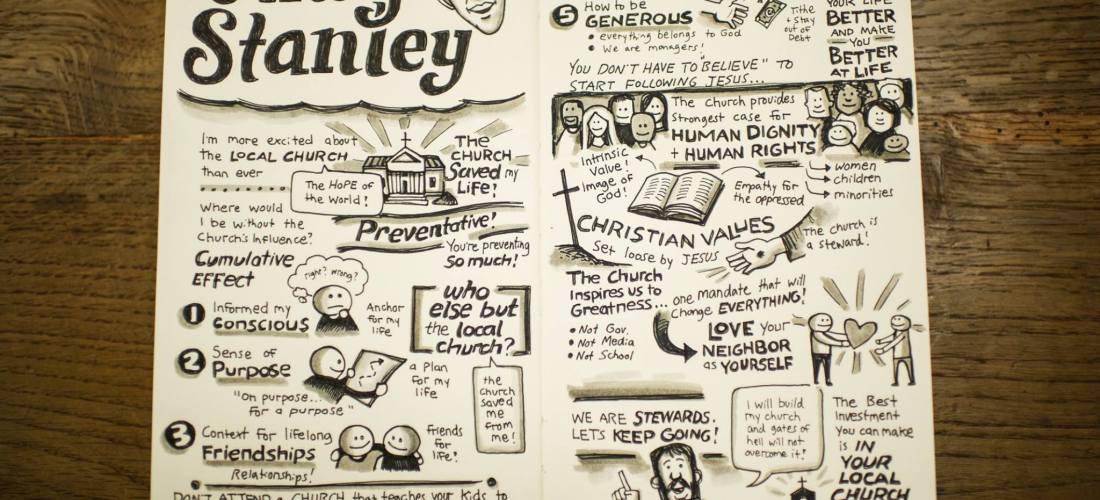
Image by the Sketch Effect.

My Orange Conference experience was a little strange this year–from the time I stepped onto the plane from the time I got back home to shower with no hot water…it was an odd year. :)

Usually when I go to any conference, I feel overwhelmed with all that I want to do in ministry. But this year, Orange was a time for me to reevaluate who am in ministry.

The honest thing is that I’m in a season wrestling with God. I’m just really pissed at him right now. On the first day of the conference I journaled about it–lamenting that I’ve given up everything to follow my call to ministry, but that the things I desire most in the world (outside of my dream career) I do not have. And although I know that God is working in my ministry, it’s been hard to see him elsewhere. In short, everything that I have right now is wrapped up in the local church and I feel like I don’t have much to show for outside of it.

Of course, I am grateful for the local church and thankful for the work that I get to do.  My prayers to God the past few months have been this simple: “God, you have given me all that I have. You have saved my life in every sense. I’d be nothing without the local church’s influence on my life. I’m frustrated and doubting you. But how can I not serve you back?”

I haven’t had much more else to say to God–just the verbal acknowledgement that I’m pushing through, even though I’m angry that I’m not getting my way when I feel like I’ve given all to give God his way.

Andy Stanley saved the day, per usual. He talked about how the local church saved his life.  Andy said that the church has done and does all of this for us:

  • informs our conscience
  • instills a sense of purpose
  • provides the context for lifelong relationships
  • serves as a window into God’s activity all over the world
  • shows us how to be generous
  • will make your life better and make you better at life
  • provides the strongest argument for human rights
  • inspires us to embrace the one mandate that could change everything: Love your neighbor as yourself

Andy argues that when you really dig into this, you realize that the church is the place that should set the tone for everything good in the world.

This is something I was processing before Orange–how good exists outside of the Church, but the Church, if properly following God’s love and Jesus’ example, should be the hub for all that is glorious and good in the world.

  • Who else can better show what it means to be open and inclusive to all than followers of Jesus Christ, who invited everyone willing to come feast at his table?
  • Who else can better take care of the earth right here and now than those who understand that they are created in God’s image for the purpose of taking care of the earth and everything on it?
  • Who else can better show grace and forgiveness to others than those who understand that they were forgiven while they were still sinners?
  • Who else can better advocate for people who experience discrimination based on race, age, disabilities, mental health disorders, socioeconomic status, gender identity, sexual orientation, and more than people who understand that each and every one of us was made in God’s precious image?
  • Who else can better demonstrate what it means to give respect before it is earned, when we believe in a God who loves us without condition?
  • Who else can better do any of this than people who believe they are instrumental in uniting the Kingdom of God with earth?

Reggie Joiner, the man behind Orange, said that when Jesus died on the cross, it validated everything he ever said about loving others. And that is why the church should be the best at this.

This is why I give everything I have for the Church. And why I’m getting over this self-absorbed lament that everything I have is wrapped up in the local church–when the truth is that the local church loves me incredibly and has taught me everything I know about loving others. To be wrapped up in the local church is kind of the goal. I missed that.

13086964_10153838559198248_8249526591248293363_o.jpg


Reflecting on Holy Week 2016

Theology

I’ve been going through a salty season…“salty” meaning that I’ve been very irritated, angry, and negative.

And since my entire life is wrapped up in the church–it would therefore make sense that some of this hurt has impacted the way I view that, as well.

But Holy Week healed me.

On the Tuesday of the week, I did the Stations of the Cross. As I walked the Labyrinth, I realized it might be the worst prayer practice possible for me. I simply cannot keep my thoughts unclouded for that long of a period of time. Especially since I spent the entire Labyrinth telling God everyone I was mad at.

I kept trying to calm myself down. And when I got to the end of the Labyrinth, I told myself to quit being angry.

Good luck with that, Heather.

Maundy Thursday is my favorite day on the liturgical calendar. This is the one day of the year that I feel completely immersed in the narrative of scripture–we wash one another’s feet and take Communion around a table together just as Jesus did the night before he was betrayed. It’s magical.

Last year I volunteered at my first Maundy Thursday ever by washing feet. The first person whose feet I washed was our senior pastor’s. I remember shaking.

A few people later I washed the feet of a man who is high in leadership at the church, who is one of the manliest yet most thoughtful people I know. He cried. He told me the last person who washed his feet was his daughter, who was in college. His youngest was a month away from moving as well. He wiped his tears on me and moved on.

A few people later a woman I didn’t know asked me my name after I washed her feet. Then she asked to wash my feet…as I wept. Her act of humility blew me away.

This year I chose not to wash feet. I’ve had such a busy year at church that I wanted to attend the service and allow myself to be served. This was kind of a big deal for me, because I’m not always great at saying “no” and allowing myself margin to rest.

But God showed up and did some cool things.

I went to have my feet washed, and the person who washed my feet was the mother of a student who I have an ongoing struggle with. I had to talk to him and his mom a few weeks ago about his behavior issues after he attempted to humiliate me in front of the group. After talking to her, I was softened for probably the first time to consider that there was more going on than I understood. It’s really humbling to realize that the people hurting you are hurting themselves, and I haven’t stopped thinking about their family. Having his mother serve me, when I couldn’t even figure out how to serve her was so humbling.

I sat down in my pew, waiting for my row’s turn to do Communion. I grinned ear-to-ear, weeping because of the view. I saw Small Group Leaders washing their students’ feet, unplanned. I saw students taking Communion around the tables together, awkward yet lovely. I saw pastors beaming as they shared this moment with the congregants.

I sat down to take Communion with a group of people–some who I knew, some who I didn’t. It was so awkward for us to do Communion around the table, but we all knew it was special because it was like the Last Supper. As they fumbled, taking their bread out of turn or spilling the juice, everyone began apologizing. Apologizing for communally doing Communion in community.

I spoke up. Classic Heather. Am I allowed to chat during Communion?

I pointed out: The Last Supper had to have been extremely awkward. When Jesus took the Passover meal and said, “Hey guys, this is my body” the disciples probably didn’t know what to do. They may have dropped the bread. They may have choked. They may have laughed. They may have spoken out of turn. And two of them were traitors.

Nobody responded to me. They just nodded (great for my self-esteem). But I passed the cup to a man who passed the cup to his son, one of my favorite 7th grade boys. In fact, he may be in my top 10 favorite students I’ve ever had. Not that I’m keeping track.

This boy dipped his bread into the cup. Then he decided he took too much juice. So he wrung his bread back in. Then we all laughed way too hard as we popped our bread into our mouth, gasping for air.

I wonder if the Last Supper was that awkward. I wonder if they did it “wrong.”

As I went back to my seat, trying not to laugh anymore, I waited. I was towards the front of the church, so I had another 20 minutes of reflection as everyone else took Communion.

It was time needed. We sang, “I’m watching, I’m waiting” as a chorus for a few minutes, which reminded me that this was why I’m here. I was here to watch. To wait. To be served.

As I watched, I watched a lot of people I was “salty” towards also receive Communion.

Have you ever watched someone you’re mad at receive the Body of Christ?

It’s infuriating.

And humbling.

And as I watched like 5 different people I’m bitter towards receive the sacrament, it also dawned on me: They get the same body of Christ that I do. They get the same blood that I do. The same cup that my 7th grade friend wrung his bread in serves us all.

Maundy Thursday reminds me that just as the student’s bread wrung out the juice, so was Christ’s blood poured out for us.

Both are unsettling thoughts. Kind of gross (and one unsanitary).

But God is big enough to handle all of this.

And in that moment, I was forgiven for being salty. And I forgave those who I had been struggling with all week.

But alas, on Good Friday, I was back to being a salty person (I know, I can’t help it).

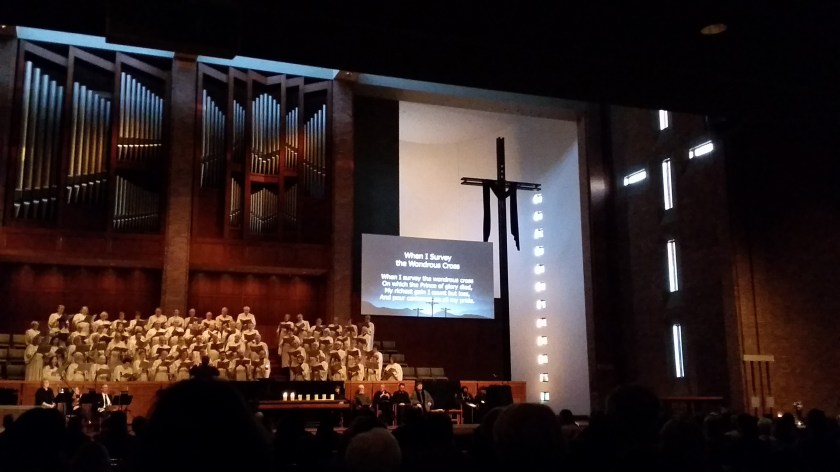
Our Good Friday service walks you through Jesus’ last 7 statements. With each statement, the lights get dimmer to reflect the darkness entering the world as Jesus was crucified.

But as the room got darker, the stained-glass cross got brighter. I think God makes the sun set this way on purpose.20160325_195310.jpg

You already know where I’m going with this, right?

As the room grows darker, the cross shines brighter.

When my heart is the darkest, the cross is the brightest. At this moment my sin of irreconcilable anger was highlighted, and I earnestly repented.

It has been two weeks since Holy Week. God and I are still wrestling through some things, of course.

But every time I see someone I’m salty with, I’m reminded they receive the same Communion.

Every time I get frustrated, I remember how bright the light of Jesus is.

Every time I feel like I’m lost in a labyrinth with my anxious thoughts, I’m reminded that there is one way out and I can’t get lost.

This post may sound like a mixture of my random thoughts and experiences, but God really healed me of some things. Holy Week did its job (even though I failed at giving things up for Lent).

Holy Week brought me out of the wilderness and to the cross.

#TBT: My Call to Ministry (and how God speaks to us)

women

During Lent, our church has been focusing on prayer. This last Sunday I taught in our preteen ministry on listening to God. Doing a series on prayer has been very tricky with tweens–prayer is very abstract and tweens are very distracted. So teaching on listening to God? This girl must be crazy.

But I think it’s important, and so I do what I do best to teach biblical truths to middle schoolers: I tell a story about it.

The clearest time that God has ever spoken to me was when I was experiencing my call to ministry at the age of 17. This may strike you as crazy, but I didn’t always want to be a youth pastor.

(gasp)

I wanted to be Oprah.

As freshmen in high school, the big English project of the year was to do a paper on what we wanted our career to be when we grew up. I had no clue. I wanted to do something theatrical (if you know me, you aren’t surprised). I had gone through a lot of rough stuff, and so I knew that I wanted to help people. I also watched Oprah every day after school. She was so benevolent to others. I admired that. I decided that I was going to follow in her footsteps: I was going to go school for broadcast journalism, work my way up in the field, and eventually have my own talk show.

This made sense to everyone around me. So much sense, that I became Editor-In-Chief of the school newspaper. So much sense, that I won the senior superlative “Most Likely to Have Her Own Talk Show.”

I was on the Oprah track (okay, maybe not, but I wanted to believe it).

I was simultaneously extremely involved in my youth group. The church gave me refuge from my home and school life, and gave me identity as a struggling teen. I was involved in every aspect of the church, and I mean every. I sang on the worship team, played guitar, ushered, taught Sunday School, even praise-danced (say whattt?). I went on mission trips and was kind of my youth pastor’s side-kick.

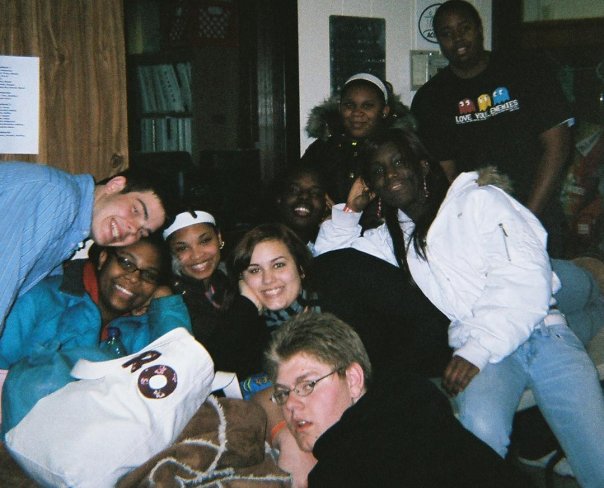
1929625_1008234968284_1359_n.jpg

Me and the squad. My youth pastor has the Pac-Man shirt that says “Love Your Enemies” on it, naturally.

When I was in the middle of my junior year, my youth pastor said to me, “You know Heather…when you graduate, you should take over the youth group.

I laughed. And laughed. And laughed.

But there was also a nudge inside of me. A sick feeling that I couldn’t get rid of. But I laughed it off some more.

There were more random people from the church who would come up to me and affirm the work I was doing in the church. Mind you: I grew up in a conservative Southern Baptist church. For people to affirm the leadership of a woman was pretty strange. And yet, it was happening.

I tried to keep laughing about it. I told my best friend about it, and she told me “Heather, that’s not funny at all. You’d be great at it.” I talked about it with a few other people—people who I thought would laugh with me. They all said that they could see me in that role. Even people who weren’t Christians affirmed that this was a good career choice for me. Even more than the whole talk show thing.

But I didn’t want to do it—I remembered thinking, “I am a hot-mess teenager. There’s no way that I could help other hot-mess teenagers.”

So I set out to prove to God that he couldn’t use me, and I began to sin A LOT. With every poor choice, I hoped to prove to God that he couldn’t use me to run his church. I’d even open the Bible, hoping that it would tell me that you had to be PERFECT in order to be a pastor or a teacher—and it told me all these stories about God using imperfect people. This only infuriated me.

It was the summer before my senior year of high school, and my sin had all caught up to me. I made some choices that hurt a lot of people, especially myself. I was feeling exhausted.

I was at summer camp, and we were worshiping God through song. I felt really heavy and had to sit down. I put my head between my knees and wept. “Lord, What do you want from me? I can’t continue life the way that I am now…but I also don’t think I should be a youth pastor.”

My list of reasons why was long: I’m a woman. I’m from a broken home. My family doesn’t understand. I might have to actually make changes to my daily life. What if a boy never wants to marry me? I won’t make very much money. I still think I should have my own talk show…

This is the one time in my entire life that I audibly heard God.

“Heather. Look up. This is what you’re meant to be.”

That’s it. That’s all I heard. A strange set of words. “Meant to be?” That’s so 90s Rom-Com.

And when I looked up, I saw teenagers around me worshiping God. I saw teenagers praying in their seats, like me, questioning God. I saw some teenagers crying, praying prayers for forgiveness. I saw some teenagers praying together, comforting one another. And it clicked: I was meant to be a youth pastor.

When I told this story to my preteens (with a few less details), I asked: Is this story about the fact that I audibly heard God’s voice?

Those smarties said “Nope! God spoke to you in lots of ways.”

And, I mean, God had to.

When I look back at my life, I can see how God was preparing me for this the entire time.

And since I accepted that, God is now molding my heart and creating new talents and gifts within in me to do this crazy thing.

And each week, I host a talk show with over a hundred students and leaders.

But my talk show doesn’t give them a free car…it gives them new life.

Praying like it’s happening

prayer

I have a hard time trusting that God will follow through. A really tough time.

Growing up I prayed every night and felt like my prayers were rarely answered. Of course, now, I understand that God answered them in a way that was even better–but it fostered a culture in me that felt like I had to do everything myself.

This fostered anxiety and mistrust, and others could see this. I overworked to compensate for my lack of trust that God could make things happen after I clock out.

Here’s my first example of how I’m learning: 2 years ago, we had 8 Small Group Leaders for all of our Middle School because it was so tough to find dedicated adults, and this year I set the goal of 24 in order to meet the needs of the growing ministry. The school year had already started and I still needed 6 SGLs, but I split them into the appropriate-sized groups anyway, trusting that these people would come out of the woodwork and join the team. And they did. This was one way that God showed me that I could live my life as if he’s already answering my prayers.

Since, I’ve tried to apply this principle in other areas of my ministry, but also my life.

This week my cat got loose when transporting her out of the house and ran off. I couldn’t find her, and I was trying not to become hysterical. A friend came to help me search for her, and they were so surprised that I wasn’t crying or panicking. In fact, it was me who said multiple times that I think we should stop searching. She had a collar, a microchip, and a very fattened body. Even though she’s down one eye and 7 teeth, she’s a good mouser. I just need to trust she will come home.

Now, don’t get me wrong–I still worried. I was sick.

But I went to work the next day, trusting she’d come home.

And when I came home, there she was.

I was living as if that prayer was answered, and once again, it calmed me and the prayer was answered.

I recognize that there’s a tension though, as I write this: How do some prayer requests get answered, and others not so much?

I can’t answer that.

But I can say that there have been times where I’ve practiced the principle of “living as if my prayers are already answered” and when they aren’t answered, it hasn’t hurt as much.

A few weeks ago one of our volunteers asked me “How do you know our prayers are working?” And I stared at the email, mouth agape and dumbfounded. What a silly question.

But I realize that we have this question. We want to know if God hears our prayers.

Statement of Faith & Doubt

Confirmation, lessons, Theology

Faith is the confidence that what we hope for will actually happen; it gives us assurance about things we cannot see.
Hebrews 11:1

What does it mean to have faith? Growing up, this verse in Hebrews comforted me to have confidence even when I’m not sure of what I’m even confident about.

Working with teenagers means that you are working with doubt, and most teenagers feel like their doubt has no place in faith.  The church I grew up in told me that my doubts were normal, but that I also needed to “give my doubts to God.”

That statement basically told me, “Doubts are normal, but good Christians don’t have them.”

But as I read that verse in Hebrews, I’m comforted. The author says that faith is (1) Confidence that what we hope for will actually happen and (2) Assurance about the things we cannot see. Other versions say that we are convicted.

Put together, faith is simply when the acknowledgment of doubt convinces us to press on.

This year I added to our Confirmation experience for students to write a Statement of Faith. We had talked about doubts back in October in my favorite lesson of the year. As I studied Statements of Faith, I encountered this article by Fuller Youth Institute:

Another church from one of our Sticky Faith Cohorts is working hard to create space for doubt in the midst of its Confirmation program. At the conclusion of the six-month process, most students write a statement of faith. Last year one student felt safe enough to write a “Statement of Doubt” instead. This allowed her to share openly with the community that her own journey of faith wasn’t yet at the place of trusting Christ. Several months later, she came to the point where she had wrestled through her doubts and decided to be baptized as an expression of her newfound trust. Alongside her were several adults who had supported her, prayed for her, and walked with her through her valley of doubt to the other side of faith.

I talked about the possibility of doing this project with our Family Ministries Pastor, and I shared my doubts with him: that if I talked about doubts with our students, they would only come to realization that they doubt a whole hell of a lot (literally. hell is a huge doubt for all of us).

But he encouraged me to give this a go.

I’m so thankful to work at a church that says both “We believe” and I believe,” meaning that we have a faith that is both universal and connected by tradition, but also that is very personal and varies from our neighbors.

I knew that I wanted to give students space to write their doubts, so I launched the “Statement of Faith & Doubt” project. Here were the steps:

Introducing the Concept

On the day of Confirmation that I introduced the project, I had students take different creeds that I printed out for them, and in groups underline the statements they agree with, and cross out the statements they weren’t so sure about. We had them write a few of the statements on a large piece of butcher paper I had on the wall.

I shared about how when I was in high school, I would always skip saying the part of the Apostle’s Creed where it says Jesus “ascended to the dead.” I thought it was creepy, and I didn’t like it. So I didn’t say it. I shared about how sometimes we don’t like the things in the Bible, or we share different beliefs from others–and that’s okay.

Also–here’s the video of me teaching that lesson.

The Project Itself

Students would, on their own, look in the back of the UMC hymnal at the section where it says “Affirmations of Faith.” There is listed a handful of creeds and statements of faith. They would write down 8 statements they agreed with, and 2 statements they didn’t.

Students would bring these Statements of Faith & Doubt to their small groups on a designated Sunday to discuss.

We sent this home with Confirmands to give to their parents with ways for Parents to plug in. Parents and mentors had questions to discuss with students about these projects on their own time.

Outcome

Small groups shared these statements of faith and talked about how doubt plays a crucial role in faith. I gave them the following small group questions:

  • Was it difficult to choose things you believed in? What about the things you doubted?
  • What’s the difference between faith and doubt?
  • Read Hebrews 1:1-3 together. How does doubt have a place in our faith?
  • Have confirmands look at their statements. Do you think that there are some things that you aren’t allowed to doubt? Like, can you doubt the virgin birth and still be a Christian?

There were a lot of commonalities in their statements–every single person doubts or dislikes the judgement of sinners. But there were also some unique statements. Here are some of those. Some are funny, others remind me of the life stage middle schoolers are in, and some convict me of what I believe now.

Statements of Faith…

  • Jesus was born of the virgin Mary. (I don’t understand why they underlined virgin, but I found it amusing
  • Jesus was is God’s son.
  • We commit ourselves to the right of…and people with disabilities. (Loved this, since her older brother has a disability)
  • Nothing will be able to separate us from the love of God.
  • For our sake he was crucified under Pontius Pilate.
  • We are not alone. (Yes, middle schooler.)
  • Great indeed is the mystery of the Gospel. Amen.

Statements of Doubt (Don’t believe / Not sure about / Don’t understand / Confusing)…

  • And in Jesus Christ his only Son. “I have always been taught that we are God’s children and this sentence contradicts that. It says that he only has one son instead of us being his children.”
  • He was crucified under Pontius Pilate. “What is under Pontius Pilate?” “What is a Pontius Pilate?” “When reading John, I found that Pilate didn’t care, it was the people that crucified him.”  (That last one made my HEART. MELT.)
  • He shall come to join the living and the dead
  • We look for the resurrection of the dead
  • We believe for the forgiveness of sins
  • Who shall separate us from the love of Christ? Shall tribulation or distress, or persecution or famine…?
  • …where we are all brothers and sisters
  • Proclaimed among the nations
  • One Catholic church
  • You have to be baptized to go to heaven
  • That he was put in a grave. “Wrong! He was buried in a tomb.”
  • That God was conceived by the Holy Spirit. “What does conceived mean?”

Last, I had two people who ignored the Creeds and made their own Statement of Faith and Doubt. This one was precious:

I believe in God,
that the thoughts in my head are sent from him
I believe he creates feelings of love
but for others, feelings of hate
I believe he puts pain onto others
but he usually spreads love
I believe that he first expected we’d sin
but not this much
I know what he expects,
and that he can only take sin in reasonable doses
I know he’s holy
I know he does love
but I believe,
after so many sins – We get a bad memory in life
He is trying to make us learn,
We just have to accept it

This project is risky–when we talk about doubt, we get vulnerable. We admit that we don’t know everything. We have to say out loud things that we don’t think we are allowed to say.

But it is rewarding–because if we can’t admit out loud our doubts to one another, then we’ll never be able to face them on our own. I noticed on a few papers that as small groups shared their doubts with one another, a few students crossed theirs out because they reconciled them just by talking about them out loud.

And that’s what it’s all about, really.

Describing Ash Wednesday

christianity, lent, Theology

I didn’t know what Ash Wednesday was until 2014, when I was in my first Lenten season at my United Methodist church. I may not have even gone to the service, except I was looking for community that evening and being introduced to a small group for the first time.

Ash Wednesday is now one of my favorite traditions. There’s something about a pastor marking a cross on your forehead while looking into your eyes and saying “Repent and believe the Gospel” that shakes you in your winter boots.

I didn’t understand what it was when I first received the ashes, and if I were to be honest, I don’t think I’ll ever understand the eternal significance of the service. Every time I try, I get blown away.

And since I couldn’t explain it well if I tried, here are my three favorite articles about Ash Wednesday.

Why Ashes? Connecting to who we are and who we can be – The United Methodist Church

When we participate in the service of ashes, we confront our sin. We recognize our inability to live up to all God has created us to be, and our need to be forgiven. No matter how often we go to church, how far we have come in our spiritual journeys, how accomplished we may feel, each of us has sinned and fallen short of the glory of God (Romans 3:23).

While this may sound fatalistic, it is not the end of the story. Lent leads to Easter, the day we celebrate that though our bodies are temporary and our lives are flawed, a day of resurrection will come when we will live in the presence of God forever.

One Wednesday every year we go to church remembering who we are, and hopeful of who we can be.

A little reading for Fat Tuesday/Ash Wednesday (from Accidental Saints) – Nadia Bolz-Weber

Here’s my image of Ash Wednesday: If our lives were a long piece of fabric with our baptism on one end and our funeral on another, and we don’t know the distance between the two, then Ash Wednesday is a time when that fabric is pinched in the middle and the ends are held up so that our baptism in the past and our funeral in the future meet. The water and words from our baptism plus the earth and words from our funerals have come from the past and future to meet us in the present. And in that meeting we are reminded of the promises of God: That we are God’s, that there is no sin, no darkness, and yes, no grave that God will not come to find us in and love us back to life. That where two or more are gathered, Christ is with us. These promises outlast our earthly bodies and the limits of time.

Ash (from Searching for Sunday) – Rachel Held-Evans

Once a year, on a Wednesday, we mix ashes with oil. We light candles and confess to one another and to God that we have sinned by what we have done and what we have left undone.  We tell the truth. Then we smear the ashes on our foreheads and together acknowledge the single reality upon which every  Catholic and Protestant, believer and atheist, scientist and mystic can agree: “Remember that you are dust and to dust and to dust you will return.” It’s the only thing we know for sure: we will die.

Ashes to ashes, dust to dust.

But a long time ago, a promise was made. A prophet called  Isaiah said a messenger would come to proclaim good news to the poor and brokenhearted, “to bestow on them a crown of beauty instead of ashes, the oil of joy instead of mourning, and a garment of praise instead of a spirit of despair.” Those who once repented in dust and ashes “will be called oaks of righteousness, a planting of the Lord for the display of his splendor” (Isaiah 61:3).

We could not become like God, so God became like us.  God showed us how to heal instead of kill, how to mend instead of destroy, how to love instead of hate, how to live instead of long for more. When we nailed God to a tree, God forgave. And when we buried God in the ground, God got up.

#ThrowbackThursday: Heather talks about Communion

christianity, Theology

When I was growing up, I didn’t understand Communion at all.

And looking back, it’s kind of adorable. I have four stories:

Heather at 7

We called it “Lord’s Supper” at my church growing up. And even though I really didn’t understand it, I was drawn to it.

In our tradition, you didn’t receive Lord’s Supper until you were saved. At the ripe age of 6, all my friends were getting saved and baptized, so I asked Jesus into my heart too. I loved Jesus, but I also wanted to fit in with my friends. Because my parents didn’t attend church, they moved very slowly to honor their wishes and make sure that I was “serious” about that act.

But who is “serious” about Jesus at 6? Well, maybe I was.

And so…I walked down the aisle about another dozen times.

One Sunday, I walked down the aisle to ask Jesus into my heart again. I filled out the membership card again. And because I was in the front aisle, I missed the Lord’s Supper.

After the service, I told the pastor I missed it. He told me it was okay. But I insisted–I was 8 years old and I wanted the wafer and the juice. So, he took the Lord’s Supper with me, individually. I don’t think I’ll ever forget that moment. He may not, either–it’s when the church realized I was going to be pretty unrelenting about this whole Jesus thing. So a few months later, my entire family came to church (for the first and only time in my life) and I was baptized.

Heather at 11

My dad’s side of the family is Catholic. One time we were visiting my great-grandmother’s church for mass. When it was time to receive the Eucharist, I stepped forward. In a Catholic church, only Catholics can receive the sacrament. My family was trying to tell me, in hushed tones, that I couldn’t go forward. In order to get my attention they were pointing and waving and even physically trying to block me.

I’m sure you’re not surprised: I pitched a fit. Upset, I cried and didn’t understand why I couldn’t receive some bread and juice. I didn’t understand the Eucharist fully, but that didn’t mean I should be denied the elements. How could you tell somebody that they can’t have the body and blood of Christ?

Heather at 18

At 18, I was first introduced to Communion by intinction. Up until this point, I had wafers and cups of juice. At one point my church had switched over to the cups where the juice was at the bottom, then there was a film, then the wafer, then another film (Looking back, I wouldn’t ever do it that way again, personally).

We were at summer camp, where I was a counselor. The camp pastor didn’t explain intinction, and nobody knew how to do it…including the adults. He left it on the altar for anybody to take it as they’d like, at their own pace.

About 12 minutes in, nobody took the Lord’s Supper. In the Southern Baptist tradition, you don’t take Lord’s Supper if you have unrepentant sin. The camp pastor got wise to the fact that this room of teenagers wasn’t that strict…so he explained it. And guess who was first to grab that bread?

Heather Lea Campbell.

Heather at 21

I took a class in college called “God and Humanity” that changed my entire perspective on Communion. For the first time, I got it.

At the end of 30 Hour Famine, they suggest breaking the fast with Communion. At my church where I served as youth director, technically anybody could serve it. But women couldn’t serve as pastors, so it’d be taboo for a woman to serve Communion.

I’m sure you can guess: I served Communion to my students. Without asking leaders of the church. I just did it. And it was fantastic.

Heather at 26

Today, I still love Communion. Since I run programs during church services, I don’t take it often, except with staff once a month.

So the Heather of today tries to sneak over into church on the first Sunday of month and take it with the congregation. We use Hawaiian sweet bread, so you can understand.

I didn’t realize my funny history with Communion until I was writing a lesson on it for Confirmation–we talked about how it’s kind of an awkward act, taking someone’s body and blood and popping it down the hatch.

But for me, I have always been an embracer of awkward and mysterious things (hence why I work with middle schoolers).

My hope is that we can raise up a generation that is desperate for Jesus the way I have been my entire life for the bread that represents the Body and the blood that represents his lifeline.


#ThrowbackThursday: The Time 20yo Heather taught on the Armor of God

lessons

Last week I gave my intern, Zach, an especially difficult lesson that he was to write from scratch and then I would watch him teach (this was the first time for either in a very long time): The Armor of God.

I forgot how difficult that passage was, and last week when I sat down with him to talk about it, I wanted to show him how taught on it when was his age. Except it would be a lesson of What Not to Do.

The Armor of God was the first curriculum series I ever wrote. I was 20 at a small Southern Baptist church and only halfway through my youth ministry degree. You can already tell this won’t turn out well.

I am so grateful that this church trusted me to lead their youth group. Really. But I look back at the things “20 year old Heather” did in ministry and LAUGH. This church allowed me the space to us their students as guinea pigs. I’m happy to say that they all have turned out to be functioning young college students, but that’s because they had a really great community to support them.

So, here are 7 things about that series that I did that is kind of silly. I dug through pictures.

1. I took this series and drug it out over 12 weeks. Yep.

2. I creatively had them create “armor” out of things I found in my dorm’s recycling bin.

72790_1480697619555_3791981_n

3. And made them fight.

67208_1480696899537_2905012_n.jpg

4. I taught them that the belt of truth was for chastity. So, they created “belts” that covered everything. Look above.

5. I created an armor guy out of poster board and added a piece to him each week. HE hung up in there for the next two years.196512_1669217652438_6213234_n.jpg

notice how I added extra papers on “the armor of God.”

6. I actually wrote on the board “Be prepared for the apocalypse.”66969_1472194286977_3206936_n.jpg

7. This was a good part: I had them take the armor of God and get creative, drawing their own.75697_1507400007098_8201961_n.jpg

The boys drew a riot cop. The girls drew a conductor.

I’m sure that in 5 more years, I’ll laugh at 26-year old Heather. But for now, it’s fun looking at these pictures and remembering how God used a newbie in ministry to create a fun atmosphere and great dialogue with students who were probably smarter than I was. And as I coach newbies in ministry now, I can assure them with history to back me that God can use you even if you get it wrong.